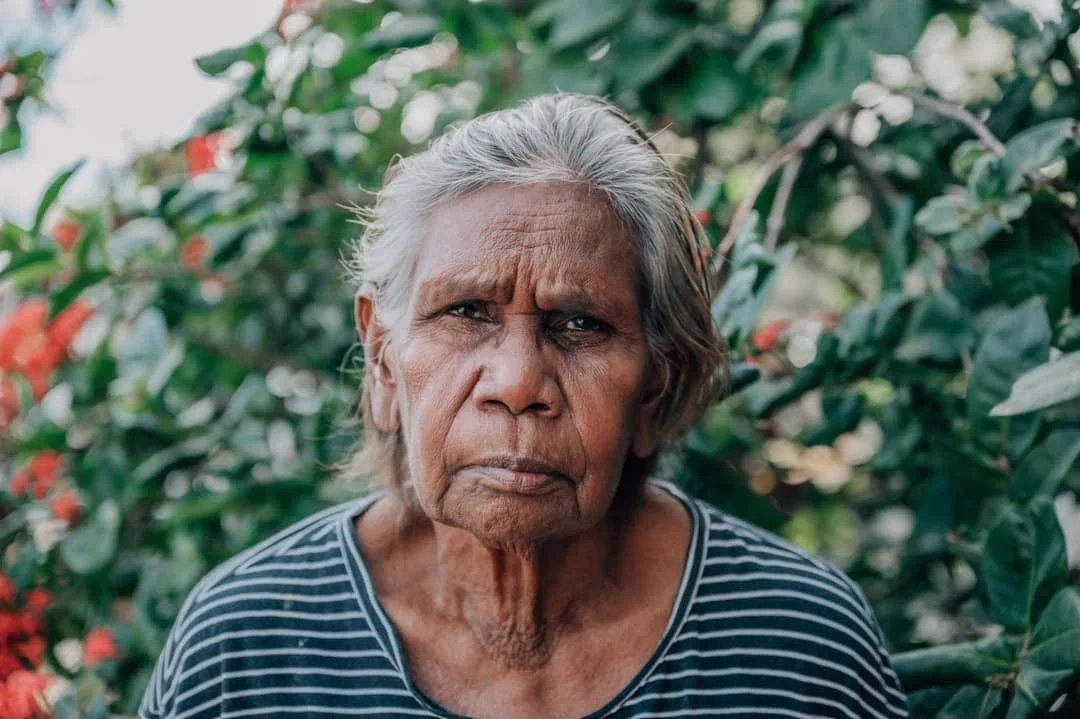
Maudie Jerrold
Image source Yinjaa Barni Art
A Yindjibarndi elder and founding member of one of the region's first art groups, Bujinhurrba, Maudie Jerrold is part of the backbone of Pilbara Aboriginal art. Born in Hooley Creek near Wittenoom and raised in Roebourne, Maudie has witnessed and helped guide her community through dramatic lifestyle changes. Maudie's colourful and intricately patterned artwork relates to the landscapes of Yindjibarndi and Ngarluma Country of the Pilbara, paying specific attention to the flora of the area and often depicting plants or flowers that have a medicinal or ceremonial purpose.
In 2006 Maudie was selected to visit Florence, Italy as part of Antica Terra Pulsante, an exhibition showcasing art from the Pilbara. In 2007 she became a member Yinjaa-Barni Art, bringing to the group her cultural knowledge and painting experience. Maudie is represented in both public and private collections in Australia and internationally and has won prizes at the Cossack Art Awards, including Best Artwork by Western Australian Aboriginal Artist (2009 and 2012). Her work has been exhibited in the Pilbara, Perth, Sydney, Singapore, Italy and Spain and has been acquired by the Art Gallery of Western Australia (2015).
Visit: YinjaaBarniArt

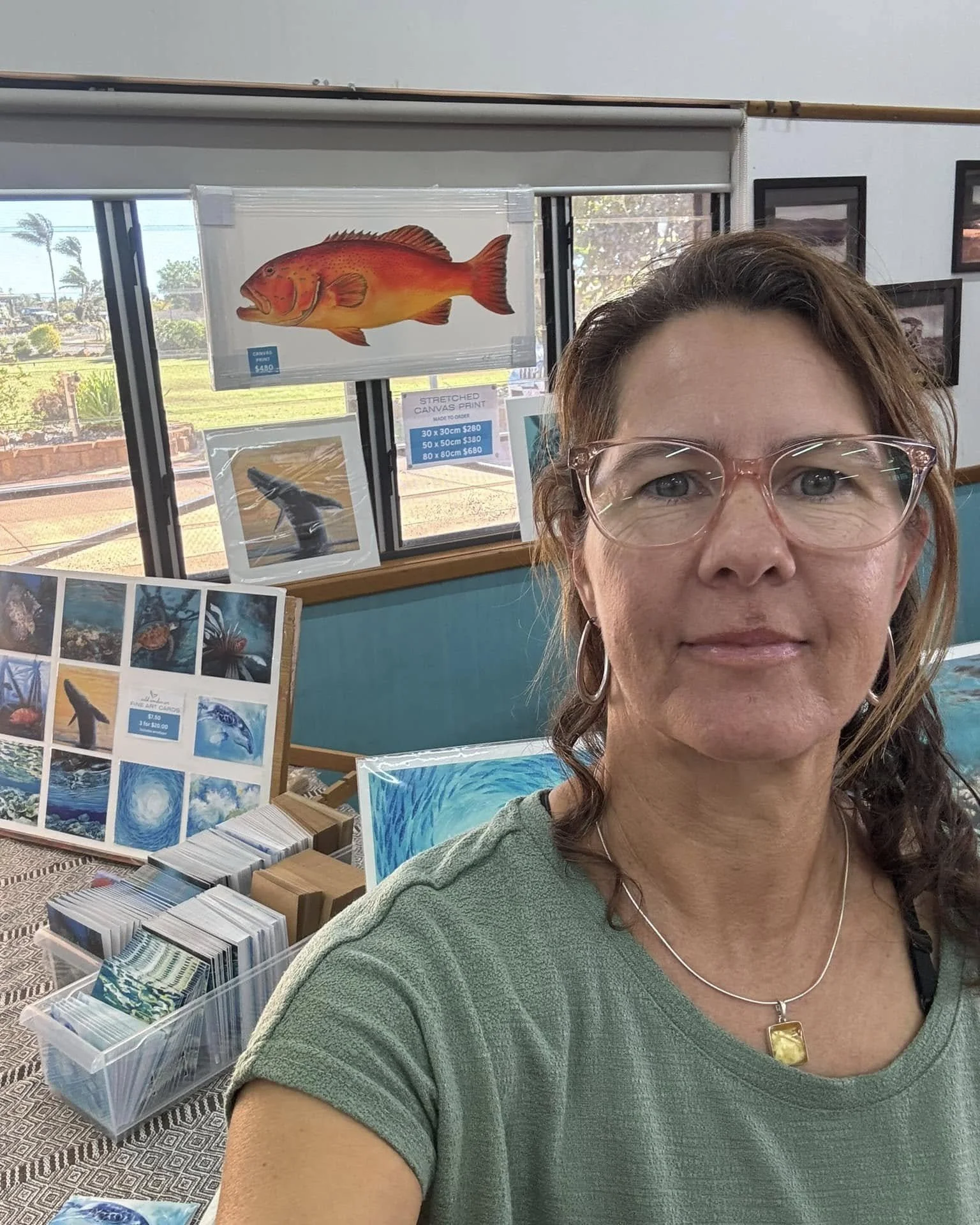
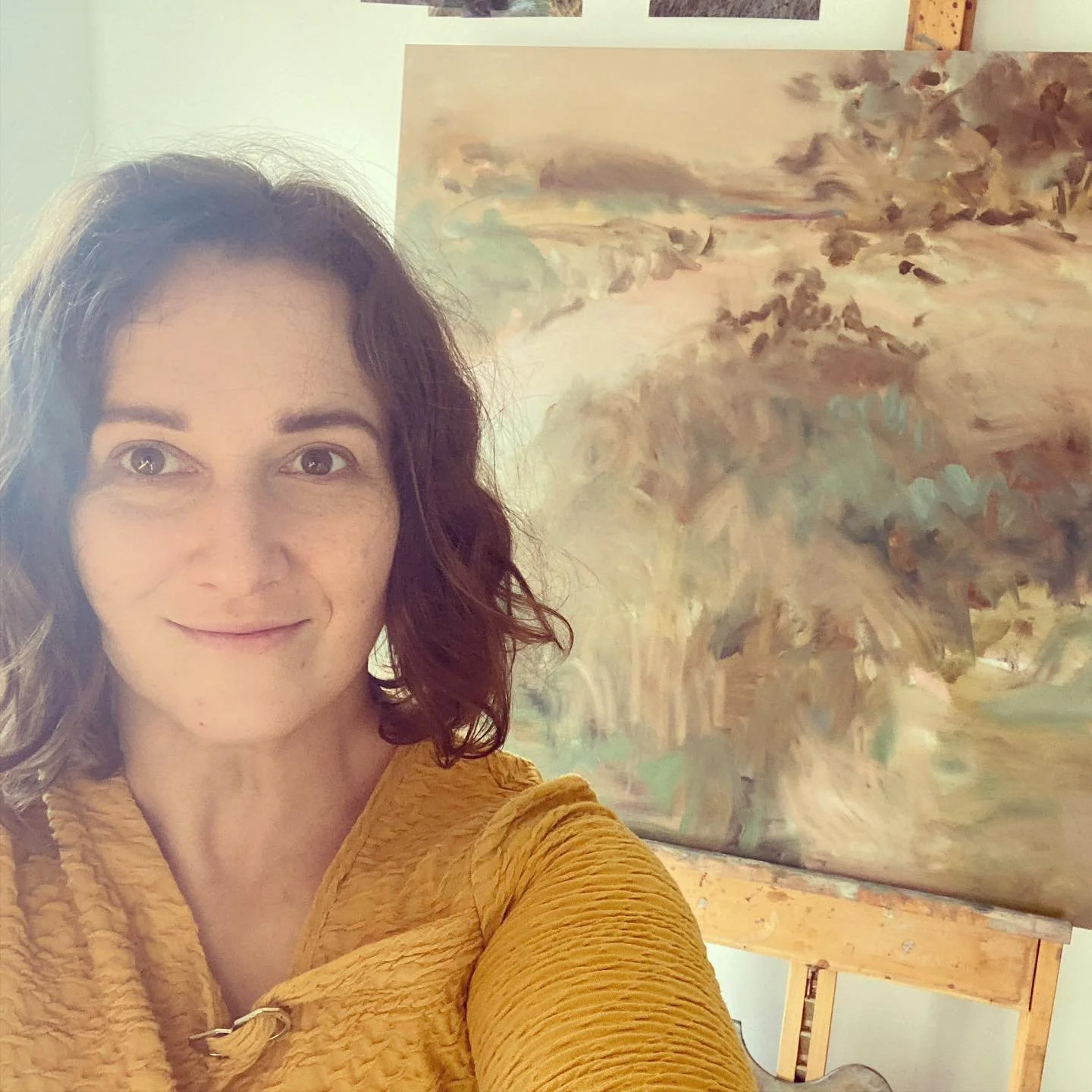
Claudia Kraus
Image source Instagram
Claudia Kraus is an Australian artist, diver, photographer and conservationist.
She combines her love of the ocean with scuba diving and underwater photography to produce beautiful paintings of the underwater world of Western Australia.
She first started scuba diving in her teens and have had a fascination for exploring the underwater world ever since. It is a place of mystery and profound beauty that inspires her every day. Scuba diving has enabled her to spend valuable time with marine animals in their natural habitats and has been the driving force behind her conservation efforts.
"There is something so captivating and enthralling about the true nature of marine animals. These creatures display no fear during our encounters, just a casual acceptance of our presence, and I feel so grateful to have the opportunity to immerse myself in the marine environment."
Claudia Kraus
The encounters she has with the marine life fuels her passion to create works of art that are vibrant, full of life and create a ripple of inspiration for the next generation of ocean warriors.
Visit: WildWonderArt, Instagram, Facebook

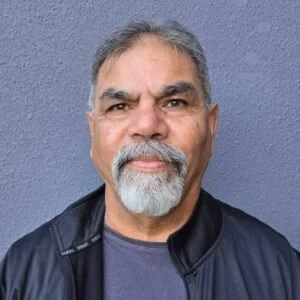
Arthur Conlon
Image source Memories of Australia
Arthur Conlon is an Aboriginal artist who lives in Queensland. Arthur is known domestically as well as internationally for authentic aboriginal fine art. Arthur’s designs comes from his experiences as a descendant of the Wakka Wakka tribes of Queensland.
Arthur was born in Cherbourg and started painting at the age of nine by studying the traditional techniques of his uncles. He is now a successful artist with his paintings in galleries across Australia and internationally. Arthur visits schools around Australia and is an inspiration to students and staff.
Visit: MemoriesofAustralia, YourJersey
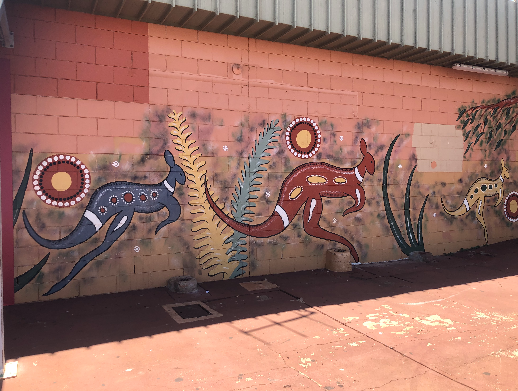
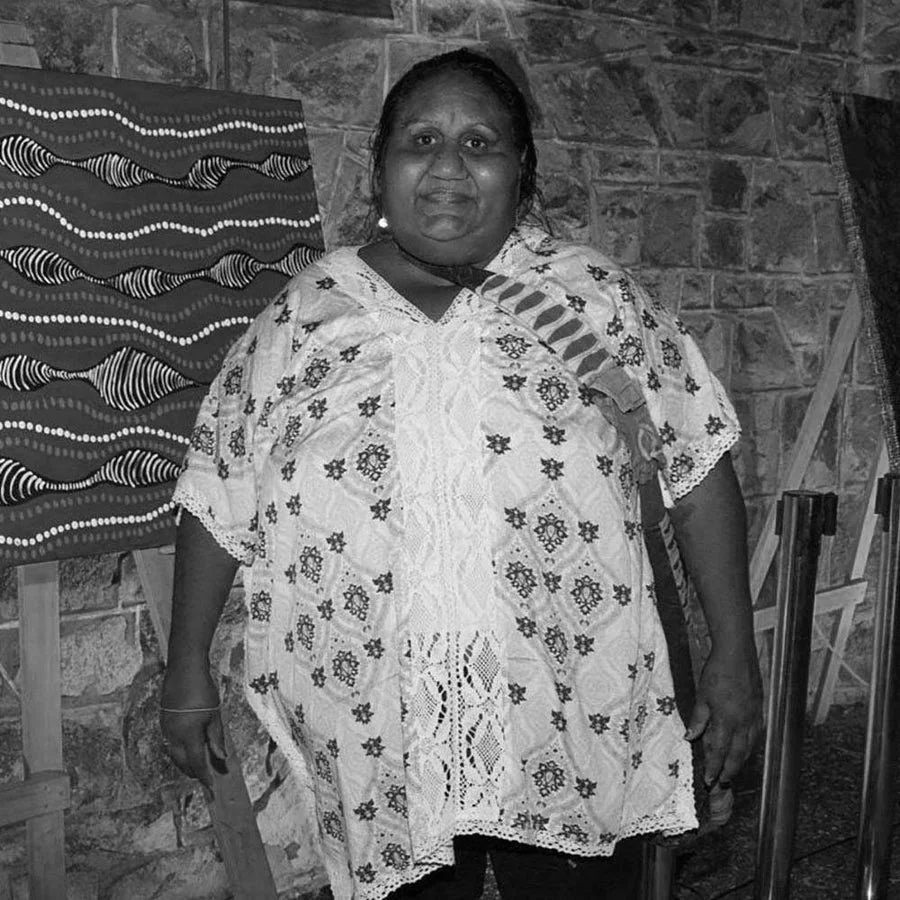
Loreen Samson
Image source Life Apparel
Loreen was a respected artist who was passionate about teaching younger generations in her community. She was born in Roebourne, Western Australia, in 1973 and sadly passed away in 2020.
Aboriginal people from the area around Roebourne call themselves Ngarda or Ngarda-nali, though many also identify with their specific language groups, referring to themselves as Ngarluma, Yindjibarndi, Guruma, or Banjima. These distinct groups have their own local traditions, resulting in a mix of laws and customs in Roebourne. Many people living in the town today have been displaced from their ancestral lands due to colonisation, the pastoral industry, and, more recently, the impacts of the mining industry.
Loreen’s artwork reflected her emotions, her advocacy for social justice, and her connection to her heritage and ancestors. She often painted about mining and its effects, using earthy tones inspired by the land. She was a multiple-time Cossack Art Award winner, and her paintings are held in the collections of the National Museum of Australia in Canberra and the Berndt Museum at the University of Western Australia.
"I draw inspiration from the beauty of the country, from the respect of the country. When we learn from the country, we experience how to do the movements of the land. The country has life. It gives life to take life."
Loreen Samson
Visit: LifeApparel, IndigiFlix


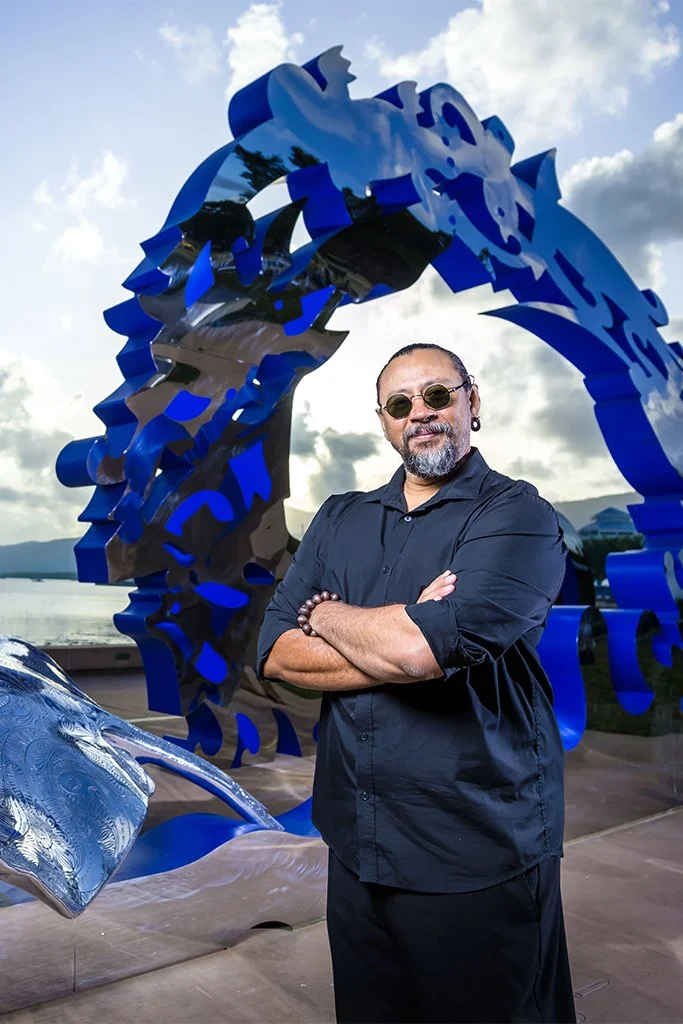
Brian Robinson
Image source Onespace
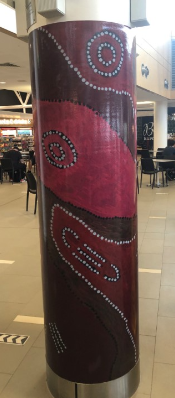
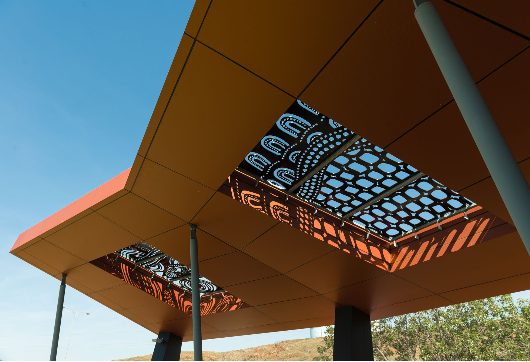
Brian Robinson is of the Kala Lagaw Ya and Wuthathi language groups of the Torres Strait. Born on Waiben (Thursday Island) and now Cairns-based, Brian is known for his printmaking and public sculptures in which he uses a variety of techniques to produce bold, innovative and distinctive works.
Robinson’s work has contributed significantly to his home environs of Cairns through a number of major public art installations including his monumental and iconic stainless steel woven sculptures installed on the Cairns Esplanade in 2003.
Robinson’s art reflects the tropical marine environment surrounding Waiben (Thursday Island), in the Torres Strait, and the inhabitants of that environment. It is an essential part of his life and culture, imbued with the customs, traditions and lifestyles of the Torres Strait Islander peoples. The animals from ancestral stories and their presence today are also an integral feature of Robinson’s work.
His work has featured in many exhibitions nationally and overseas, including in Berlin, Noumea, Washington DC and New York City. Brian’s work is held in major collections including National Gallery of Australia; National Gallery of Victoria; National Museum of Australia; the Queensland Art Gallery/Gallery of Modern Art; Tjibaou Cultural Centre, Noumea, New Caledonia; the Australian National Maritime Museum; and the Kluge-Ruhe Aboriginal Art Collection, Virginia, USA. Robinson’s public art commissions are handled exclusively through Onespace.
Visit: Onespace, CairnsArtGallery

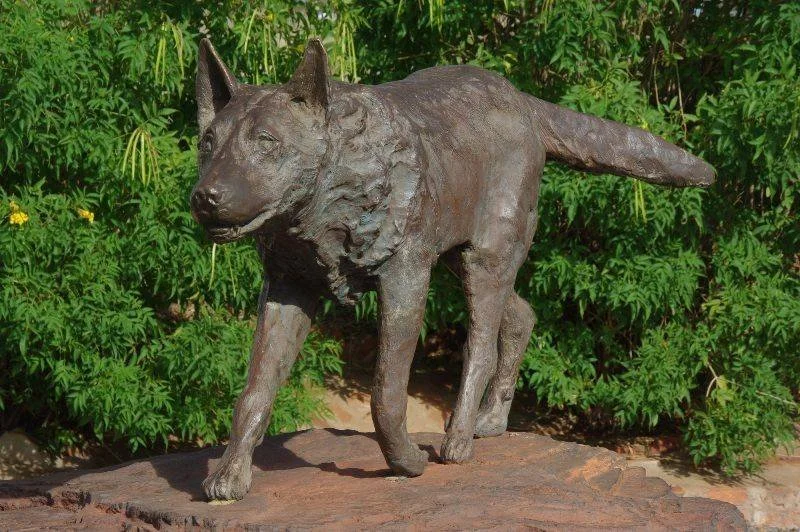
Meri Forrest
Image source Monument Australia
Meri Forrest is a Perth-based sculptress who is known for creating the Red Dog statue in Dampier, Western Australia. She donated her time and skills to create the memorial for Red Dog, a famous kelpie-cross who traveled throughout the Pilbara region. The statue was erected in Dampier, one of the towns Red Dog often visited.
Visit: MonumentAustralia, Facebook

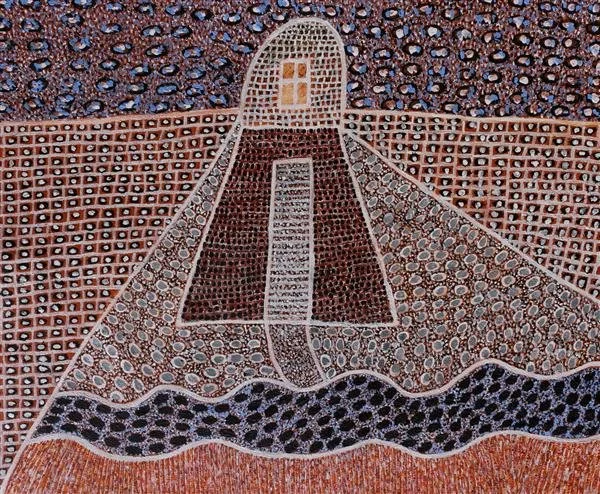
Clifton Mack
Image source Yinjaa Barni Art
Clifton Mack (1952 - 2019) was an elder of the Yindjibarndi people. He started painting in 2001 and his art represented his Pilbara Country and its stories. He expressed love for his land and his culture in his distinctive and small patches of colour laid out in lines. Mr Mack's beautiful artworks took form in layered colours and overlapping patterns to create dimensional depth which combined both traditional and contemporary influences. Mr Mack's father was revered Yindjibarndi Rainmaker Long Mack who carried the knowledge of water for his people. Knowledge of water, its locations, seasons, and an intimate understanding of the freshwater-bringing serpent Warlu, is a fundamental tenet of Yindjibarndi lore. Much of Mr Mack's work related this mindset of water and its flow through Yindjibarndi Country.
In 2006 Mr Mack was selected to visit Florence, Italy as part of Antica Terra Pulsante, an exhibition showcasing art from the Pilbara. In 2010 and 2014, he was a finalist in the prestigious Telstra National Aboriginal and Torres Strait Islander Art Awards. He has won many prizes at the Cossack Art Awards and first prize at the Royal Bank of Scotland Emerging Artist Awards in Sydney. Mr Mack's work is represented in National, State and private collections, and was exhibited regularly in private galleries in Fremantle and Sydney, including a 2016 lighthouse series exhibition at Chalk Horse Gallery alongside works by Chalk Horse co-director Jasper Knight.
Visit: YinjaaBarniArt


Jenna Halden
Image source Colours of Our Country
Jenna Halden is a Kariyarra / Yindjibarndi artist who lives in the Pilbara town of Wickham in Western Australia.
Jenna first started painting at the age of 11, when she saw her older sister paint in Aboriginal dot art. She has been painting ever since. She paints about her country, animals, plants, and dreamtime stories that she has heard as a child from her mother and grandmother.
Jenna Halden is an independent artist – not formally aligned with a specific art centre, and whose stories, personal histories and talents are shared through creative illustration on canvas. Independent artists bring a diverse array of styles, techniques and cultural expressions to the exhibition.
Visit: ColoursofOurCountry, Facebook, NgaardaMedia

George Haynes
Image source Artist’s Chronicle
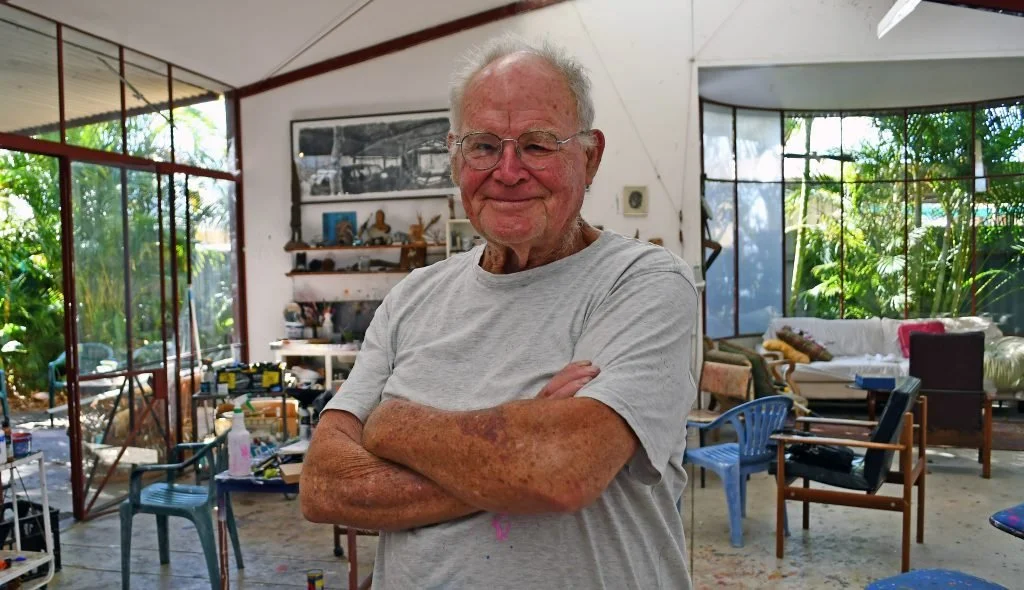
George Haynes was born in Kenya in 1938 and moved to Western Australia in 1962, after studying at the Chelsea School of Art, London. Shortly after, he started exhibiting at Skinner Galleries, the first commercial gallery in Perth, and has been exhibiting nationally and internationally ever since.
His paintings are characteristically drenched in colour and are a keen observation of everyday Australian life and landscape. He is a master of light, creating harmonious paintings of colour, tone, and temperature, with a flair for composition that imbues a musical quality to his works. His sophisticated use of colour and light has influenced and inspired generations of artists.
George is a prolific artist whose work resides in the most prestigious private and public collections, including the National Gallery of Australia, the Art Gallery of New South Wales, the National Gallery of Victoria, the Art Gallery of Western Australia, Artbank, Bankwest, The University of Western Australia, Curtin University, Murdoch University.
George Haynes: In Search of Painting is the newly published artist monograph featuring essays by eminent arts writers John McDonald (Art Critic, Sydney Morning Herald) and Sally Quin (Curator, University of Western Australia Art Collection). The 200-page book illustrates George’s art career with over 150 colour photographs.
Visit: GeorgeHaynes, ArtCollectiveWA, Artist’sChronicle

Antony Muia
Image source Instagram
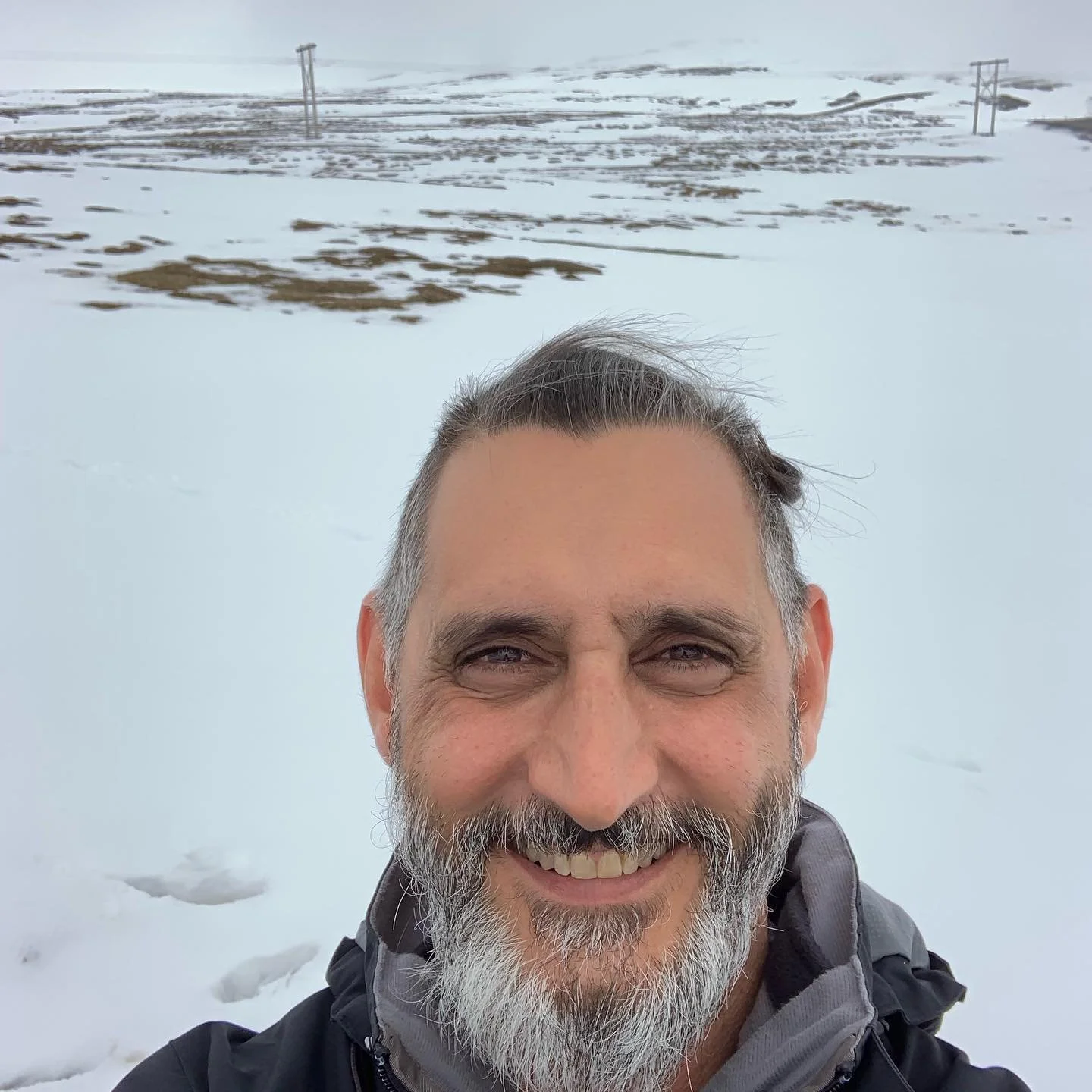
Antony Muia was born in 1966, in Perth, Western Australia. Since studying fine art at Claremont School of Art, he has concentrated on a drawing-based multidisciplinary practice and has exhibited regularly since his first solo exhibition in 1990.
Antony's work reflects humanity and addresses the body in relation to culture and society. His figurative style draws upon diverse representations of the body with influences ranging from Roman sculpture to social media posts. He is a social realist making satirical and sometimes pseudo erotic work that both explores and questions aesthetic value and moral consequence. His work often deals with the ability art has to navigate complexities surrounding the human condition, including entangled and contradictory relationships in art and day to day life.
Antony's graphic works are primarily on paper and rendered using a style that utilises restraint to balance pattern and void. His visual language consists of various graphic marks including scratchy line work made with pen and ink, smudges, puddles and veils of transparent watercolour.
Antony has exhibited in solo and group shows around Australia, including formative exhibitions with Delaney Galleries in Perth and Artplace in Perth and Melbourne, as well as being selected as a finalist for national art prizes such as the Dobell Drawing Prize at the Art Gallery of New South Wales and the Benalla Nude Art Prize in Victoria.
His works are represented in prestigious collections such the Kerry Stokes Collection, the Art Gallery of Western Australia and the St John of God Health Care Collection.
Visit: Instagram, ArtCollectiveWA


David Garland
Image source WA Today
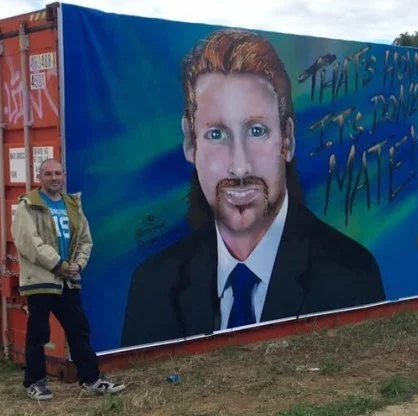
With over 20 years experience in graphic design, murals, community projects and signage, David Garland a local Perth artist has a diverse range of works.
Known for working with fellow artist Drew Straker, they established Abnormaldesign. With works in multiple places in Perth such as the Shenton Park Railway Station Mural (Shenton Park Station), Lost and Found (Edgewater station) and Carousel (Glendalough Bridge Wall).
Visit: AbnormalDesign, Artsource, WAtoday

Owen Davies
Image source Facebook (City of Armadale)
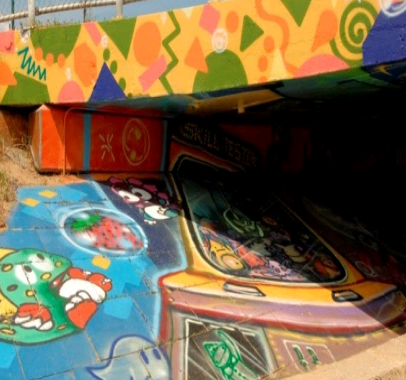
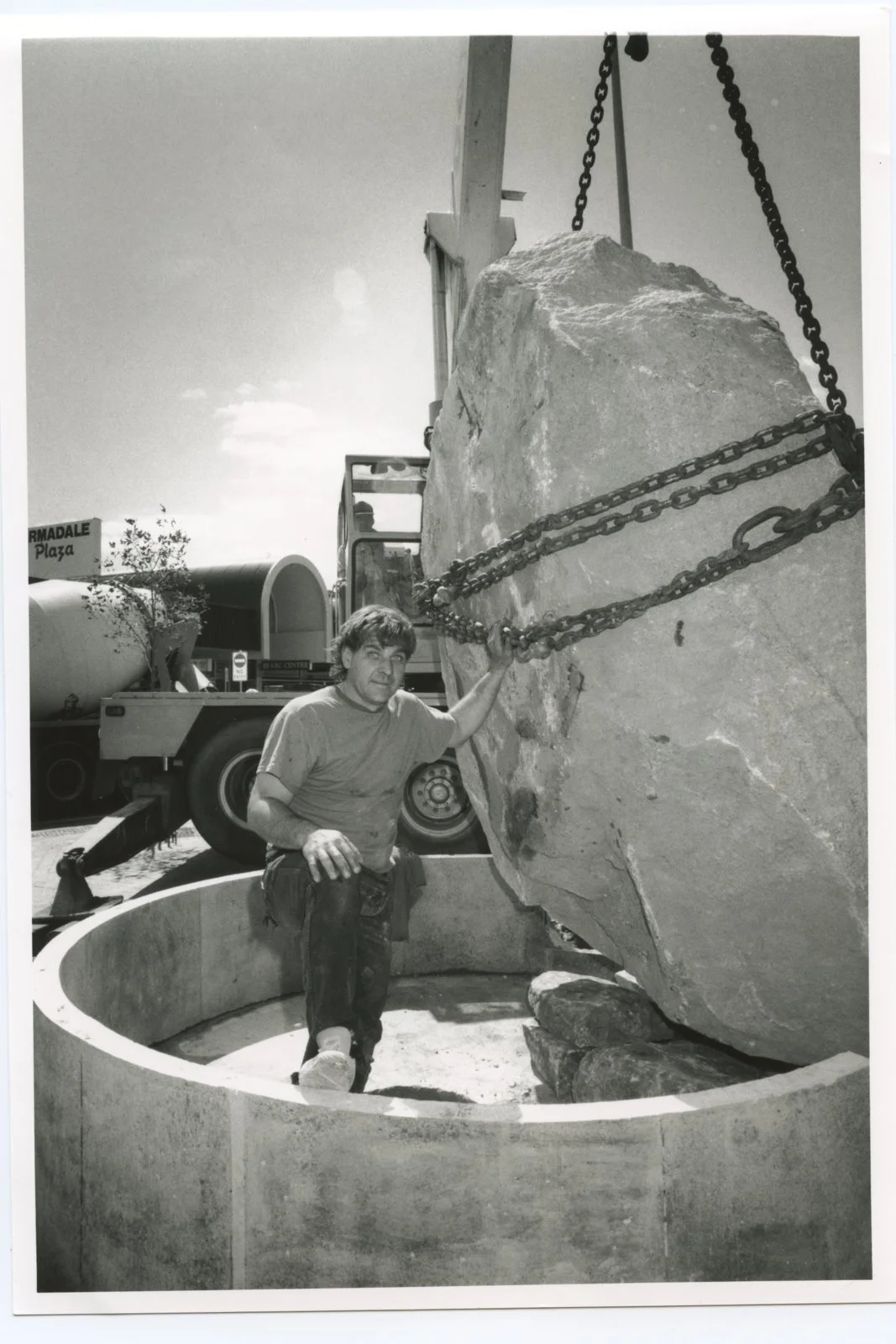
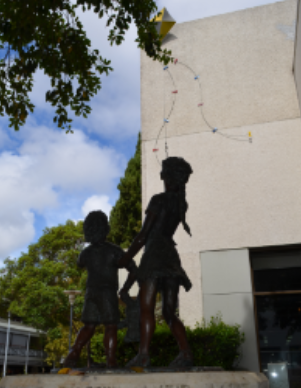
Owen Davies is a sculptor born in 1961, living and running a business in Yanchep. Working mainly with bronze he has statues around Perth such as the I'm an 1890's swagman installed in 1994 at Armadale and the iconic Kite Children sculpture was originally unveiled in March 1992, outside the Emergency Department of Princess Margaret Children’s Hospital. It was relocated and unveiled at the Subiaco Library on the 2nd of September 2016 following the relocation of the children’s hospital.
Visit: PublicArtAroundtheWorld, Facebook(CityofArmadale), Dlook

Mark Grey-Smith
Image source Margaret River Region
Born in 1950 in Darlington, Western Australia.
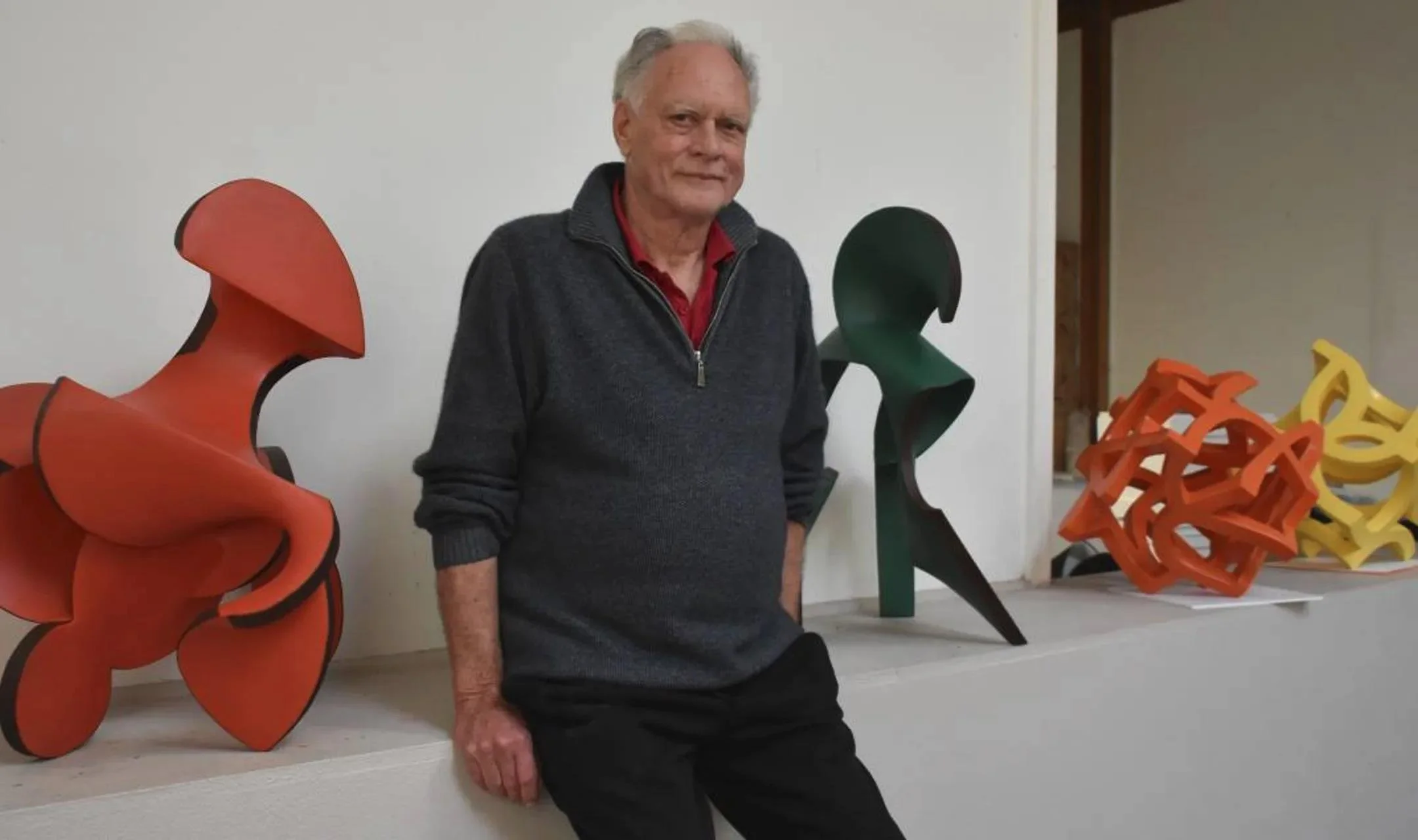
For five decades, Mark Grey-Smith has been making drawing-sand sculptures that embody his love of nature, science, mathematics, and the ways of knowing our world that is implicit in an understanding of the natural world. He has created a body of works that speak eloquently of the underlying geometry that informs us and teases us with hints of mysteries yet to be revealed.
From his early studies at Chelsea School of Art in the 1970s, working with such luminaries as Eduardo Paolozzi and Nigel Hall, he was inspired to create work that replicated the geometry of nature.
On his return to Perth, he co-foundered PRAXIS. This artist-run space energised a younger generation of artists by challenging them to make art relevant to this place while intently aware of international concerns. It was an ambition at the core of his own practice, which he honed in Perth before departing for Canberra and further study at the Australian National University.
Later he taught at that institution for a decade before returning to Perth and eventually settling in Pemberton and then Busselton.
– Words by Professor Ted Snell AM CitWA, Edith Cowan University
Visit: MarkGreySmith, ABCNews, MargaretRiverRegion

Pemberton Arts Group
Image source Pemberton Arts Group
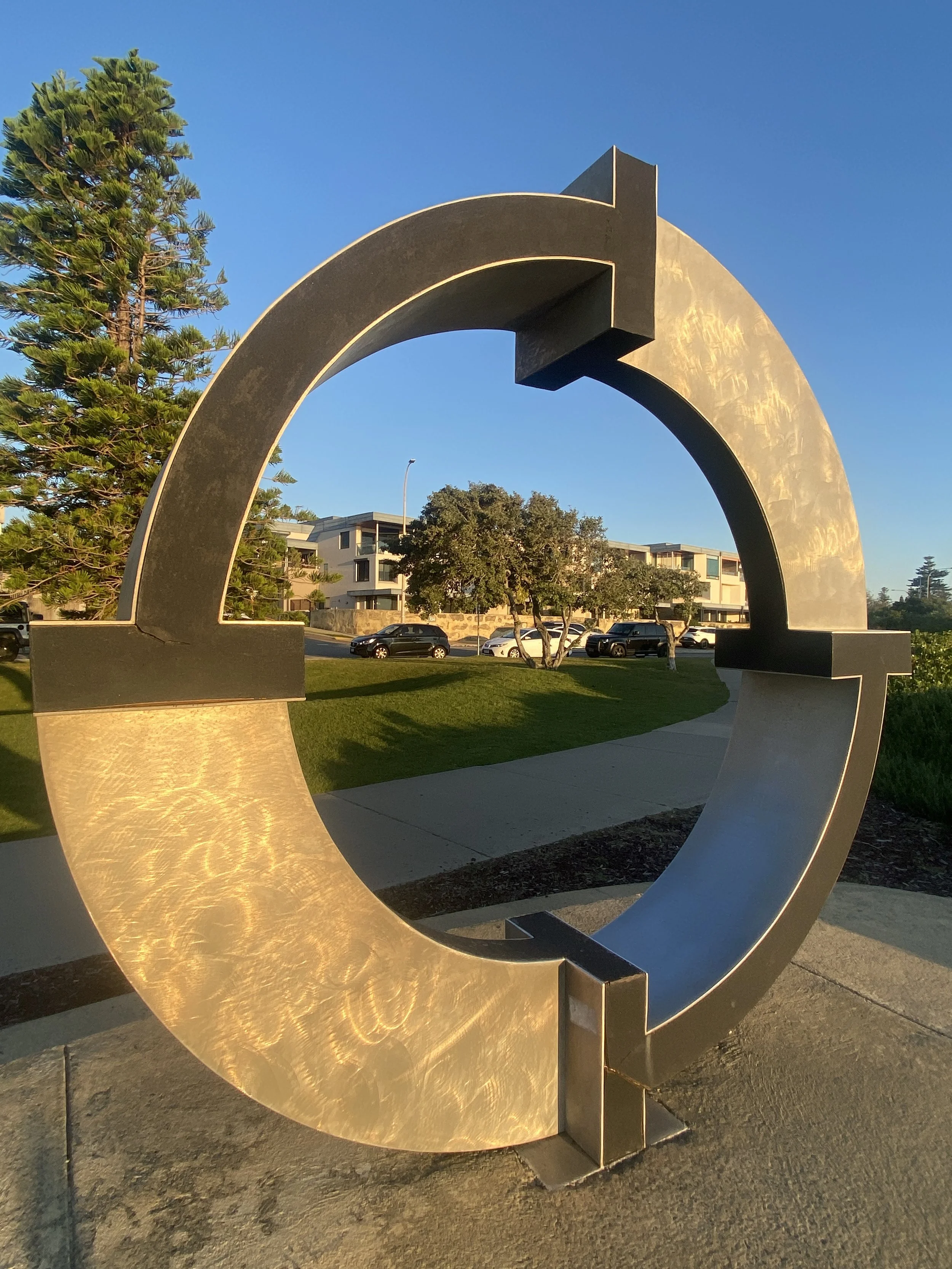
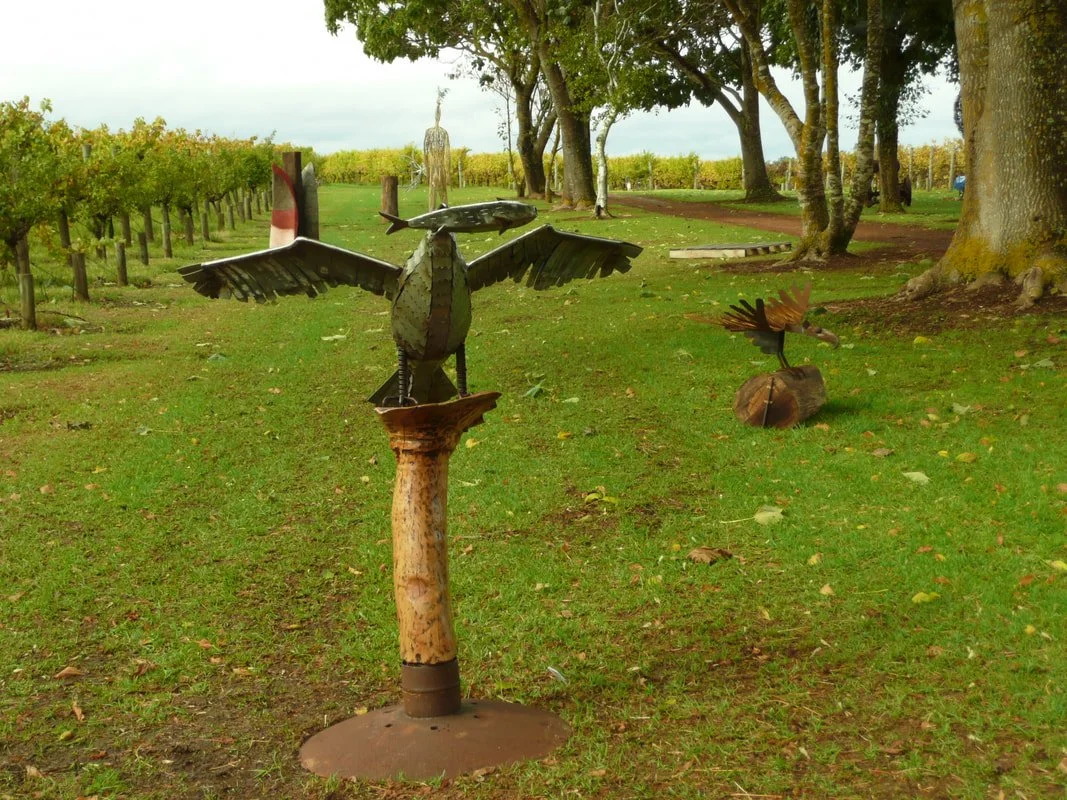
The Pemberton Arts Group is committed to promoting excellence and cultural opportunities through the Arts. They aim to encourage emerging artists, support their members and create an Arts culture within the local community. They also encourage other artistic disciplines such as music and creative writing.
Formed in 2004 by a group of local Pemberton artists, they are a not for profit incorporated organisation, with a working committee comprised of multi-skilled volunteers. They meet monthly to plan and facilitate exhibitions, workshops and activities throughout the year.
In 2013 PAG completed a large public art project involving ten artists, which included working with local school children.
Visit: PembertonArtsGroup, Facebook
Edward Kohler
Image source Brisbane City Council
Edward Frederick Kohler (1890-1964), sculptor, was born on 27 May 1890 at Tarampa, near Lowood, Queensland, son of Prussian-born parents August Friedrich Kohler, carpenter, and his wife Annie Hilda Limprich. Lured by the discovery of gold, Gus left for Kalgoorlie, Western Australia, about 1893; Hilda and her four children followed him six months later. The Kohlers led an itinerant life in the backblocks and Edward's formal education was minimal. A shy young man, with a talent for music and art, he was apprenticed to a blacksmith at Narrogin. After his parents separated, he joined his father at Korrelocking.
On 18 February 1915 Kohler enlisted in the Australian Imperial Force. He fought with the 11th Battalion at Gallipoli (from June) and on the Western Front (from March 1916). In November 1916 he was posted to I Anzac (later Australian) Corps schools as an instructor in gunnery. Promoted company sergeant major in January 1917, he was awarded the Meritorious Service Medal for his diligence and for using his spare time to make sectional drawings of gun-parts. He was discharged in England on 15 April 1919. During the war he had married Denise Marie Louise Devacht (d.1936), a 24-year-old Belgian; they were to have twin sons. In 1921-28 he performed clerical duties with the Imperial War Graves Commission in France.
Kohler attended the Académie des Beaux-Arts, Lille, from 1928. He also studied the modelling of animals, particularly horses, under René Joire. In 1930-32 he worked for M. Subricas, a French sculptor, and spent eight months at Pierre de Soete's studio in Brussels, producing war memorials, busts, medals and trophies. Due to the breakdown of his marriage, and to regulations which prevented foreigners from obtaining government commissions in France and Belgium, Kohler returned to Western Australia in 1932. He became chief sculptor at the Ajax Plaster Co. Ltd's studios in West Perth where he received the most prosaic of assignments, such as garden ornaments and heads (based on Hollywood movie-stars) for hat shops. At the chapel of the Churches of Christ, Perth, on 17 November 1937 he married Eileen Hazel Cook, a 31-year-old artist.
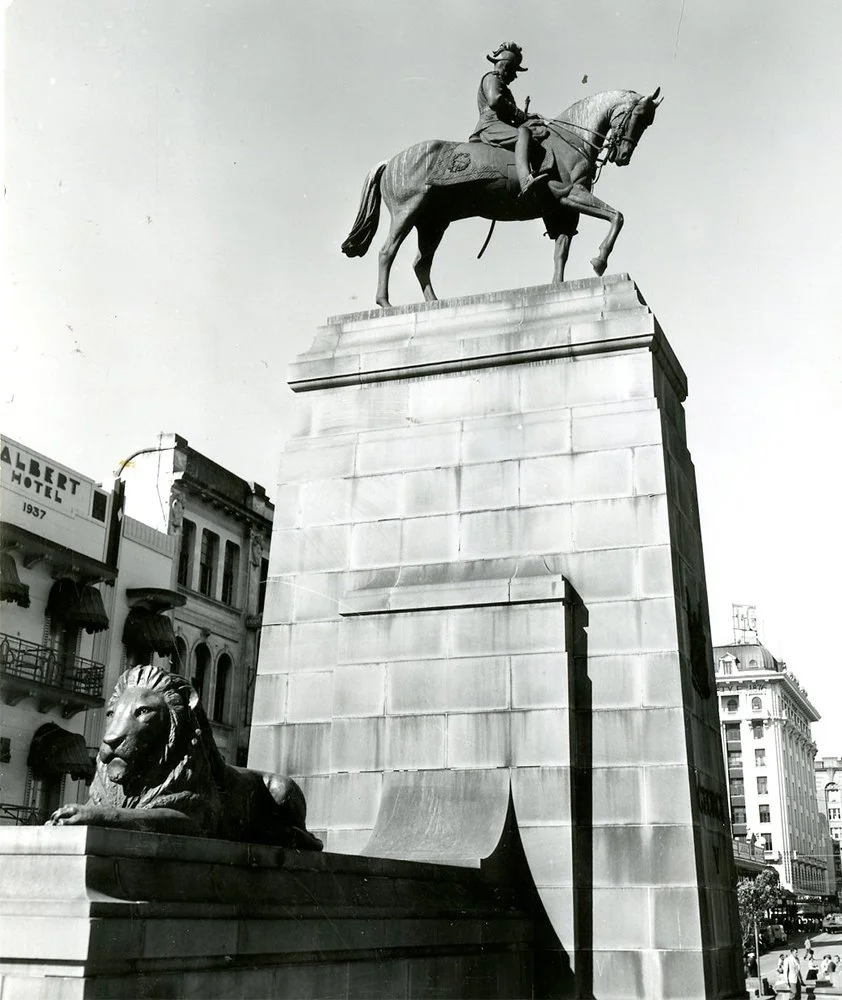
After winning a national competition with his equestrian statue of King George V, which was unveiled in 1938 outside the Brisbane City Hall, numerous public and private commissions came Kohler's way: they included the Sir Talbot Hobbs memorial (1940) on Riverside Drive, Perth, and bas-relief panels for buildings such as the Piccadilly Theatre, Karrakatta Crematorium, the Institute of Agriculture at the University of Western Australia and the Collie Mine Workers' Institute (1952). Kohler was the second professionally trained sculptor to practise successfully in the State (Pietro Porcelli was the first). During World War II he was employed as a camouflage officer with the Department of Home Security. In the postwar period his figurative style was no longer fashionable, but he continued to receive commissions from his major patron, the Catholic Church. His religious works are located throughout Australia, among them the beautiful 'Joseph the Carpenter and the Boy Jesus' (1949-50) at Corpus Christi College, Werribee, Victoria. Survived by his wife and their two daughters, and by the twins of his first marriage, Kohler died on 28 June 1964 in Perth and was buried with Anglican rites in Karrakatta cemetery.
Visit: AustralianWarMemorial, AustralianDictionaryofBiography, MuseumofBrisbane

Yondee Shane Hansen
Image source Japingka Aboriginal Art
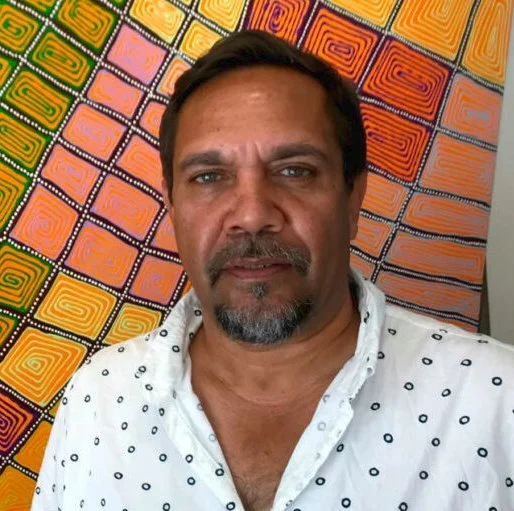
Yondee Shane Hansen was born in 1964 in Perth, Western Australia. A Nyoongar artist, he was taught about art and its practice by his older relatives, mainly his father and aunts. His family is well known for its bark paintings and as a child, he would collect bark along the Swan River for their work. He remembers- “Art was all around me – in the paddocks when the flowers came, in the fields and the crops, along the rivers and around the rocks.”
He started drawing with charcoal before working with paints, focusing solely on black and white. “We had to walk in to get to town. I started drawing with charcoal, drawing on the light grey logs that had no bark. I love the simplicity of black and white, the strength. The black is fire, the white is the tree. From childhood, that’s why I mostly paint black and white paintings.” The simplicity of the two colours provides his work with a strength and presence. His works are connected to a narrative exploring mission life, animals and hunting.
These paintings done in Yondee’s signature black and white style depict stories in an abstract, conceptual form. Subjects of the work vary such as “Storm Clouds” where Yondee paints the change from dry to wet season, “Rock Formations” depicting shapes of the Australian outback and its rock formations and “Fish Nets” where Yondee paints the fish nets made from the grass collected along rivers.
Visit: JapingkaAboriginalArt, CreativeNative, AboriginalArtGalleries


Peter Farmer Junior
Image source The Great Southern Herald
“I believe that art can bring communities together to learn and communicate stories, like we did in traditional times.”
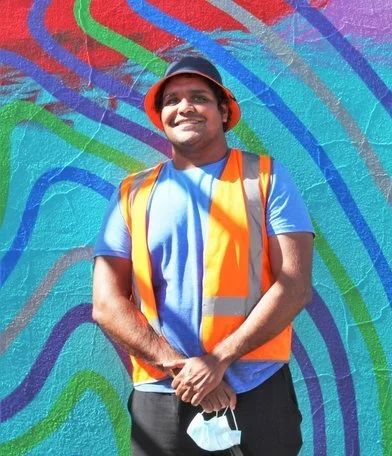
Peter Farmer is a Minang Man who’s paternal lineage hail from Albany & Gnowangerup regions in the South West of the state. His mother being Ballardong and his father Minang; Peter claims connections through his paternal Grandmother’s country “Whadjak”, and his birthplace (Subiaco).
Peter graduated years 12 in 2014 and after graduation, was invited to train a pre-season with famed TAC Cup Club “The Geelong Falcons”. Geelong was a community that welcomed another Farmer into the football frame and he also began his academic journey at Deakin University enrolling in a Bachelor of Arts in Visual Arts.
Peter’s father Peter Farmer Snr encouraged him to apply for Public Artworks Commissions; the first awarded to him was in 2015 – Royal Perth Hospital – “Cafeteria Floor”. In 2016 both Peter & Kylie Graham were awarded “Moorn Barndi” the City of Belmont’s new Lookout Park, renamed ‘Beliya Kard Boodja’ & WINNER of the National Landscape Architectural Award for Cultural Heritage.
In early 2017 the City of Cockburn awarded Peter “The New Aquatic Centre” – Aboriginal Sculpture welcoming visitors to the state of the art facility and space. Peter has been fortunate to have shown in a myriad of selected group Exhibition in 2014, 2015 and 2016; and was the only Aboriginal Artist to showcase and exhibit at “Fringe World” All Ages 2017, YMCA, HQ, Leederville, WA.
In 2018 Peter has been awarded two more important Public Art installations, as part of the new branding at the New Perth Airport, and the Royal Perth Hospital’s Aboriginal Uniforms for their Aboriginal Liaison Staff; as well as way-finding signage throughout the City complex.
In early 2018 Peter was the first Pop-up retail store to launch the “Fill This Space” campaign launched by Activate Perth. “Chirriger Dreaming” and the Young Aboriginal Artists Collective was a success in identifying a need for a more central ‘Aboriginal Arts Gallery’ in the City of Perth.
In 2019 Peter was chosen from the best Noongar Artist in the state to install the “SKY STORIES”, Aboriginal Astronomy Project at the Perth Observatory.
Visit: Instagram, FremantleFC, HistoricHeartofPerth


Adrian Jones
Image source Eugene Scrivener (Museum of Perth)
On 8 January 2021, conceptual and installation artist Adrian Jones passed away at the age of 63 from pancreatic cancer in his hometown, Perth.
Jones devoted much of his career to public art projects, exploring the history of Australia and Aboriginal culture, art activism, and the conditions of urbanization. After receiving his MFA from the University of Tasmania, Jones launched an artist-exchange program between Australia and New Zealand, which led to him building a multinational network of artists and thinkers from Australia and Southeast Asia. From 1987 to 1993, he was the coordinator of ARX (originally, the Australia and Regions Exchange, later renamed the Artists Regional Exchange), whose network of artists from Southeast Asia contributed to their participation in the first Asia Pacific Triennal in 1993 at the Queensland Art Gallery in Brisbane. ARX participants included Lisa Reihana and Peter Robinson (New Zealand); Matthew Ngui (Singapore); Ismail Zain and Wong Hoy Cheong (Malaysia); FX Harsono, Jim Supungkat, and Aramaiani (Indonesia); Apinan Poshyananda and Pinaree Sanpitak (Thailand), as well as Julie Ewington, Destiny Deacon, Hossein Valamanesh, Simryn Gill, and many others from Australia. It was also through ARX that Jones met the Philippine independent curator and critic Marian Pastor Roces, with whom he would spend many decades as life-partners and creative collaborators.
His permanent installation at Perth Central Railway Station, Project Text-tiles (1991), comprises 15 brass terrazzo tiles embedded in the paving of Platform 5 with quotes from community members such as railway employees and longtime commuters. In 1994, he created The Missing Room for Domus Academy Winter School at the Royal Melbourne Institute of Technology, a project about traveling personal spaces. In 1997, he collaborated with conceptual artist and friend Judy Freya Sibayan for Auto/Biography, recording his art practice and accomplishments to date, for Sibayan’s nomadic performance gallery, Scapular Gallery Nomad (SGN) (1996–2002), a portable micro-gallery that she wore around her neck every day and on her travels.
In collaboration with Pastor Roces, Jones’s conceptual designs were exhibited internationally, including for the Philippine Pavilion at Expo 2008 in Zaragoza, Spain. Following the theme of water and sustainable development, the pavilion featured aquatic elements and was filled with transparent spheres, highlighting the Philippine’s archipelagic provinces. This concept won that year’s Grand Prix for Best Designed Pavilion. At Expo 2010 in Shanghai, their design concept for the Philippine Pavilion featured painted colorful hands on the exterior of the pavilion, drawing attention to the country’s healers, artists, and builders.
Visit: ArtAsiaPacific, Pressenza


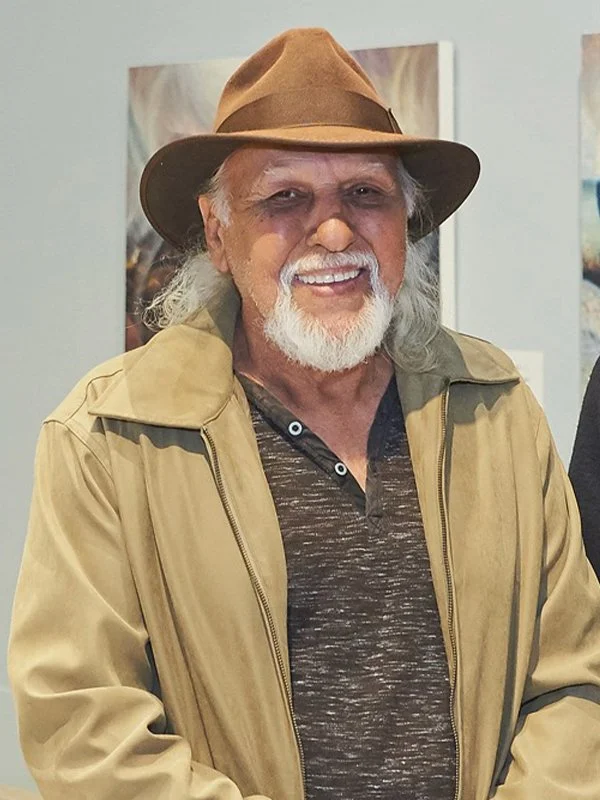
Tjyllyungoo (Lance Chadd)
Image source Apparatus
Lance Chadd, a Bibbulmun Nyoongar/Budimia Yamatji Aboriginal artist born in the South West town of Bunbury, works under his traditional tribal name ‘Tjyllyungoo’ (meaning, Elder Man/Wisdom/Law, given to him by his Father, Norman Chadd, a well-known Drover of Yamatji Country). His name and breathtaking work are known, recognised and respected throughout South Western Australian and International art circles, South Western Aboriginal communities, art curators and researchers on South Western Aboriginal Art and artists. He is known as one of the most senior and important Nyoongar artists alive.
Born in 1954, he grew up in the south-west regional town of Bunbury, located within Noongar country. He began painting professionally, in 1981. His unique realistic style is akin to those of Hans Heysen and Albert Namatjira, to whose work he was introduced at an early age.
His uncles Alan Kelly and Reynold Hart were also fine landscape painters at the Carrolup Mission settlement.
Tjyllyungoo has painted professionally since 1981, and his paintings are in many collections worldwide and locally including the Art Gallery of Western Australia, Parliament House and the Berndt Museum Collection. His 3D sculptures and public artworks expressed throughout WA with career pinnacle sculpture WIRIN standing tall and strong in Yagan Square Perth CBD.
Tjyllyungoo is prolific in his mastery of depicting Australian landscapes, with constantly evolving work producing progressively more powerful collections, as he skilfully weaves the intangible Nyoongar spiritual beliefs and stories, through landforms, in paintings and in 3D Public artworks. These exquisite expressions allow easy access for the viewer to search and find understanding of Nyoongar culture and how the land and spirit of the people are inseparable. His peoples take pride in and are inspired by his work, remembering and maintaining their identity, strength of spirit and sense of belonging in their homeland Boodja.
Visit: Wikipedia, Apparatus, YungarraGallery, CollieMuralTrail


